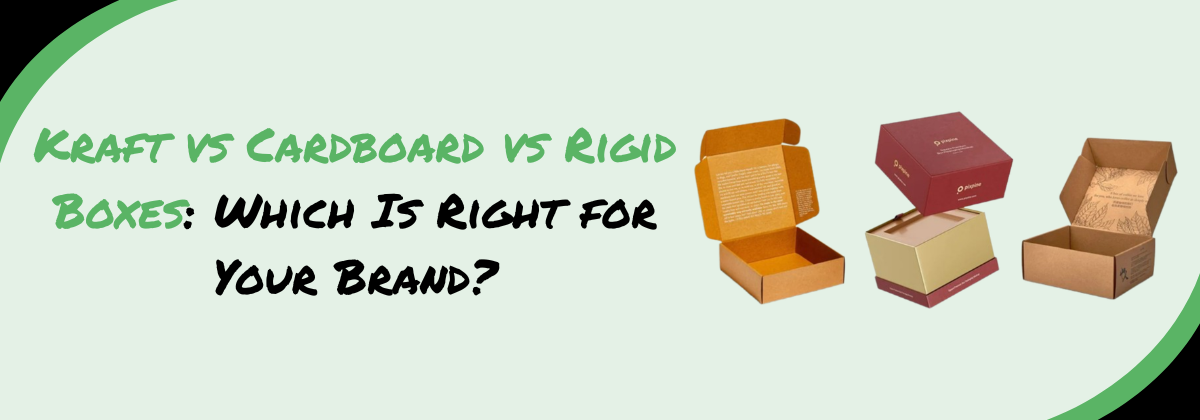
Packaging isn’t just a container. It’s the first physical impression your customer gets of your brand. It affects shipping costs, product safety, unboxing experience, and even whether someone posts about you on social media. Choose wrong, and you’re either wasting money or losing customers before they even open the box.
This guide breaks down the three most common custom packaging materials — Kraft, Cardboard (Corrugated), and Rigid Boxes — so you can make a smart, informed decision for your business.
What Is Packaging Material in eCommerce?
Packaging material refers to the physical substance used to build your product’s box or wrapper. In eCommerce, your packaging has to do three jobs at once: protect the product during shipping, represent your brand visually, and create a positive experience for the customer.
The material you choose directly affects all three. A rigid box signals luxury. A corrugated cardboard box handles rough shipping. Kraft paper says eco-conscious. None of them is universally “best” — the right choice depends on your product, your audience, and your budget.
Overview of the 3 Main Packaging Materials
Before diving deep, here’s a quick lay of the land:
- Kraft — made from natural wood pulp, brown in color, biodegradable, great for lightweight or eco-friendly brands
- Cardboard (Corrugated) — the workhorse of eCommerce shipping, strong and protective with that distinctive fluted inner layer
- Rigid Boxes — thick, sturdy, premium-feel boxes used for luxury goods, electronics, and high-end gifting
Each has a distinct personality and a distinct cost profile. Let’s look at how they stack up.
Kraft vs Cardboard vs Rigid Boxes: Quick Comparison Table
| Feature | Kraft | Cardboard (Corrugated) | Rigid Boxes |
|---|---|---|---|
| Cost | Low–Medium | Low | High |
| Strength | Moderate | High | Very High |
| Branding Options | Limited (natural look) | Good (printable) | Excellent (premium finish) |
| Sustainability | Excellent | Good | Moderate |
| Best Use Case | Lightweight goods, eco brands | Shipping, heavy/fragile items | Luxury, gift, electronics |
| Customer Perception | Natural, organic | Functional | Premium, high-end |
| Weight | Lightweight | Medium | Heavy |
Kraft Packaging: Features, Pros, Cons & Best Use Cases
What Is Kraft Packaging?
Kraft is made from chemical pulp produced during the kraft process — a wood treatment method that results in strong, tear-resistant paper. You’ll recognize it by its natural brown or off-white color. It’s what most paper bags, mailer pouches, and natural-look product wrapping is made from.
When to Use It
Kraft works best for brands that want to communicate sustainability, simplicity, or an artisan feel. Think handmade candles, organic skincare, specialty coffee, or indie fashion labels.
If your target customer cares about the environment and responds to raw, minimal aesthetics, Kraft is probably your packaging material.
Advantages
- Eco-friendly by default — biodegradable, often recycled, appeals to conscious consumers
- Lightweight — keeps shipping costs down, especially for subscription boxes or bulk orders
- Affordable at scale — one of the most cost-effective ecommerce packaging solutions available
- Tactile appeal — the natural texture gives products an organic, handcrafted feel
- Customizable — stamps, stickers, kraft tape, and simple 1–2 color printing all work well on it
Limitations
- Not ideal for heavy or fragile products without internal padding
- Doesn’t support full-color, high-gloss printing as well as other materials
- Limited structural rigidity — not suitable for items that need a firm outer shell
- Moisture can weaken it during transit
Real-World Example
A small-batch herbal tea company using Kraft pouches with a simple black-stamped logo communicates authenticity far better than a glossy plastic wrapper. It also aligns with the values of their health-conscious audience.
Cardboard (Corrugated) Boxes: Features, Pros, Cons & Use Cases
What Is Corrugated Cardboard?
Corrugated cardboard consists of a fluted layer (the “wave” in the middle) sandwiched between two flat liner boards. That wave structure is what gives it strength — it distributes impact and resists crushing.
There are different flute grades (A, B, C, E) that vary in thickness and cushioning. Most standard shipping boxes use B or C flute.
Why It’s the Backbone of eCommerce Packaging
The vast majority of eCommerce shipments use corrugated boxes, and there’s a good reason for that. It’s strong, versatile, and cost-effective at nearly every volume level.
Advantages
- Excellent protection — handles drops, stacking, and rough handling during transit
- Lightweight relative to strength — doesn’t add excessive weight to shipments
- Highly customizable — full-color printing is widely available, including digital and offset options
- Cost-efficient — especially in bulk; prices drop significantly at higher volumes
- Widely recyclable — most curbside programs accept corrugated cardboard
- Works for almost any product — from books and bottles to kitchen appliances and clothing
Limitations
- Can feel utilitarian if not well-designed — the unboxing experience is less special
- Requires good internal packaging (tissue, inserts, foam) for fragile items
- Heavier than Kraft mailers for lightweight products
Use Cases for eCommerce
- Subscription boxes (beauty, food, wellness)
- Electronics and gadgets
- Apparel shipped in bulk
- Heavy items like home goods or tools
- B2B shipping
Corrugated cardboard is the default for most eCommerce packaging solutions because it hits the sweet spot between cost, protection, and printability.
Rigid Boxes: Features, Pros, Cons & Best Use Cases
What Are Rigid Boxes?
Rigid boxes (also called set-up boxes) are made from thick paperboard — typically 2–3mm chipboard — wrapped in decorative paper. Unlike corrugated or Kraft, they don’t fold flat. They hold their shape permanently.
Think of an iPhone box. An expensive watch. A high-end gift set. That’s rigid box territory.
Why Brands Invest in Rigid Boxes
The unboxing experience with a rigid box is fundamentally different. The weight, the resistance when you lift the lid, the satisfying fit — it all signals quality before the customer even sees the product.
For brands selling premium products, that perception matters enormously. Rigid packaging can justify a higher price point and dramatically increase perceived value.
Advantages
- Premium unboxing experience — creates emotional impact that drives social sharing and repeat purchases
- Exceptional structural protection — the thick walls protect fragile or high-value items reliably
- Branding powerhouse — hot foiling, embossing, soft-touch lamination, UV spot — all look stunning on rigid boxes
- Reusable — customers often keep rigid boxes, giving your brand extended visibility
- Strong shelf presence — ideal for retail environments where the box itself is part of the display
Limitations
- High cost — significantly more expensive than Kraft or corrugated, especially at low volumes
- Heavy — adds weight to shipments, which increases shipping costs
- Doesn’t fold flat — requires more storage space in your warehouse
- Slower production — longer lead times, especially for custom designs
Best Use Cases
- Luxury cosmetics and skincare
- Jewelry and accessories
- Electronics and tech accessories
- Premium food gifts (chocolates, spirits, specialty items)
- High-end fashion and apparel
Which Packaging Material Is Best for Your Brand?
Here’s the honest answer: it depends on three things — your product, your customer, and your margins.
Choose Kraft if:
- You sell lightweight products (candles, soap, small accessories)
- Your brand values sustainability and natural aesthetics
- You’re a startup watching costs closely
- Your customer appreciates minimal, handcrafted presentation
Choose Corrugated Cardboard if:
- You ship heavier or fragile items that need structural protection
- You’re running high order volumes and need cost efficiency
- You want full-color custom branding without a premium price tag
- You ship subscription boxes or B2B orders in bulk
Choose Rigid Boxes if:
- You sell premium or luxury products where price point is high
- The unboxing experience is central to your brand identity
- You’re targeting gifting occasions (weddings, holidays, corporate gifting)
- You want packaging that reinforces a premium price tag and drives social sharing
Many brands actually use a combination. A skincare brand, for example, might use corrugated outer shipping boxes and rigid inner boxes for a premium product line. The key is matching the packaging material to the specific product and audience, not picking one solution for everything.
Cost Comparison
This is where most businesses get surprised. Let’s be real about the numbers.
Kraft: Most affordable option. Kraft mailers and bags can start at $0.10–$0.50 per unit at volume. Custom-printed Kraft boxes run $0.80–$2.00+ depending on size and print complexity.
Corrugated Cardboard: Mid-range pricing. Plain stock boxes cost $0.50–$2.00. Custom printed corrugated boxes typically run $1.50–$5.00 per unit, with prices dropping significantly at 500+ units.
Rigid Boxes: Premium pricing. Custom rigid boxes typically start at $3.00–$8.00 per unit and can go much higher for complex finishes. They become more viable above 500–1,000 units.
What Affects Packaging Cost
- Volume — the single biggest factor. Prices drop sharply as quantity increases.
- Printing — more colors, specialty finishes (foil, embossing, matte lamination) add cost
- Size — larger boxes use more material
- Customization — die-cuts, inserts, magnetic closures all affect price
- Lead time — rush orders cost more
Tips to Reduce Packaging Costs
- Order in larger quantities if your products move consistently
- Start with 1–2 color printing and add embellishments as revenue grows
- Use standard box sizes where possible to avoid custom tooling fees
- Combine internal packaging (tissue, crinkle paper) with a simpler outer box to get premium feel at lower cost
Sustainability Comparison
Sustainability isn’t just a trend — it directly affects purchasing decisions. Over 60% of consumers say they prefer brands with eco-friendly packaging, and that number is climbing.
Kraft wins outright here. It’s made from natural wood pulp, biodegrades easily, is widely recyclable, and produces less chemical waste during manufacturing. For brands positioning around environmental responsibility, it’s the clearest signal you can send.
Corrugated Cardboard is a strong second. It’s one of the most recycled materials in the world. Most corrugated boxes contain 40–90% recycled content already, and curbside pickup accepts them everywhere. The main concern is the ink and coatings used for printing.
Rigid Boxes are the least eco-friendly of the three. The combination of chipboard, decorative paper, glue, and specialty coatings makes them harder to recycle. That said, they’re often reused by customers, which offsets some environmental impact. Some manufacturers now offer FSC-certified rigid boxes with soy-based inks.
If sustainability is a pillar of your brand, Kraft or corrugated cardboard are your best options. If you must use rigid boxes, look for suppliers who use recycled chipboard and avoid plastic coatings.
Common Packaging Mistakes to Avoid
Even smart brands get this wrong. Here’s what to watch for:
1. Choosing packaging based on aesthetics alone A beautiful rigid box on a $12 product doesn’t make financial sense. Match packaging investment to product price point and margin.
2. Ignoring dimensional weight in shipping Carriers charge based on dimensional weight, not just actual weight. Over-sized boxes can significantly increase your shipping costs. Always size your packaging appropriately.
3. Skipping structural testing Don’t assume your packaging will survive shipping. Do a real drop test. Ship a sample. See what arrives. Especially important for corrugated boxes with fragile items.
4. Under-investing in branding A plain brown box is a missed opportunity. Even Kraft packaging can have strong branding with a well-placed stamp or sticker. The unboxing experience is marketing — use it.
5. Not factoring in storage space Rigid boxes don’t fold flat. If you’re storing 5,000 units in a small warehouse, that becomes a real problem. Factor in storage volume when calculating total cost.
6. Going custom too early Custom packaging requires minimum order quantities. Don’t lock yourself into 1,000 units of custom boxes before you’ve validated your product. Start with stock options and customize when volume justifies it.
Final Verdict: Packaging That Serves Your Business
Here’s the packaging material comparison summary you can actually use:
| Situation | Best Choice |
|---|---|
| Budget-conscious startup | Kraft |
| Heavy/fragile product shipping | Corrugated Cardboard |
| Subscription box brand | Corrugated Cardboard |
| Luxury or premium product | Rigid Box |
| Eco-focused brand | Kraft |
| High-volume eCommerce | Corrugated Cardboard |
| Gift packaging or retail shelf | Rigid Box |
The best eCommerce brands don’t treat packaging as an afterthought. They treat it as part of the product experience — and they choose materials that align with their brand values, shipping realities, and margin structures.
Kraft is natural and cost-effective. Corrugated is strong and versatile. Rigid boxes are premium and powerful. None of them is perfect for everyone — but one of them is probably right for you.
Get Custom Packaging That Represents Your Brand
Choosing the right material is the first step — but executing it well is where most brands struggle. At Vivid Printing Hub, we help eCommerce businesses, Shopify sellers, and startups design and produce high-quality custom packaging across all three material types.
Whether you need sustainable Kraft mailers, custom-printed corrugated shipping boxes, or luxury rigid boxes with premium finishes, our team will guide you from material selection to final production.
Get high-quality custom packaging solutions from Vivid Printing Hub today — and give your products the presentation they deserve.
👉 Request a Quote at vividprintinghub.com
Frequently Asked Questions
Q: What is the most cost-effective packaging material for eCommerce?
Kraft is generally the most affordable, especially for lightweight products. Corrugated cardboard offers the best value for shipping protection, with costs dropping significantly at higher volumes. Rigid boxes are more expensive but justified for premium-priced products.
Q: Which packaging material is most eco-friendly?
Kraft is the most eco-friendly option — it’s biodegradable, widely recyclable, and made from natural wood pulp. Corrugated cardboard is also highly recyclable and often contains significant post-consumer recycled content. Rigid boxes are the least eco-friendly due to mixed materials and coatings.
Q: What’s the difference between Kraft and corrugated cardboard?
Kraft is a single-layer paper or paperboard made from wood pulp — lightweight and flexible. Corrugated cardboard has three layers (two flat liners with a fluted middle layer) that give it superior strength and impact resistance. Corrugated is better for shipping protection; Kraft is better for lightweight items and eco-branding.
Q: When should I use rigid boxes for my packaging?
Use rigid boxes when your product price point is high enough to justify the cost ($50+), when unboxing experience is central to your brand, or when you’re targeting gift occasions or luxury retail. The premium feel of rigid boxes reinforces high-end positioning and increases perceived product value.
Q: Can I mix packaging materials for different products?
Absolutely — and many successful brands do. Use Kraft for smaller, lightweight items; corrugated for heavier or fragile products; and rigid boxes for your premium or hero products. Mixing materials based on product type is a smart way to manage costs while still delivering a great customer experience.
|
Design Your Custom Box Today Free design support. Free 3D mockup. Free USA shipping. Low MOQ from 50 units. No die or plate charges. |