
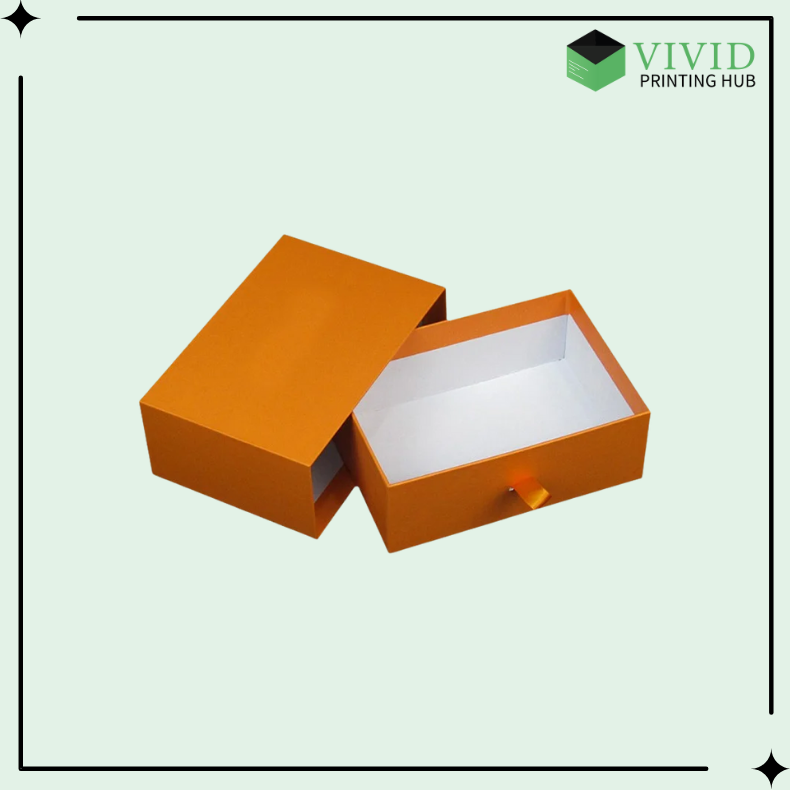


In the fast-paced world of business and e-commerce, standing out from the crowd is crucial. The packaging you choose for your products can make a significant difference in how your brand is perceived. That’s where custom slide rigid boxes come into play. These unique and versatile packaging solutions not only protect your products but also create an unforgettable unboxing experience for your customers. In this article, we will explore the benefits and customization options of custom slide rigid boxes offered by Vivid Printing Hub.
Starting From:
$5.00 Original price was: $5.00.$3.50Current price is: $3.50.
Product SKU: vivid-0027

| Box Style | Custom Made Boxes |
|---|---|
| Dimension (L + W + H) | All Custom Sizes & Shapes |
| Quantities | Minimum 50 Boxes |
| Paper Stock | 52pt to 90pt |
| Printing | CMYK, PMS, No Printing |
| Finishing | Gloss Lamination, Matte Lamination, Gloss AQ, Gloss UV, Matte UV, Spot UV, Embossing, Foiling |
| Included Options | Die Cutting, Gluing, Scored, Perforation |
| Additional Options | Eco-Friendly, Recycled Boxes, Biodegradable |
| Proof | Flat View, 3D Mock-up, Physical Sampling (On request) |
| Turnaround | 15-18 Business Days And Rush Order |
| Shipping | FedEx, DHL, UPS |
Pull the ribbon tab. The drawer begins to move — slowly, smoothly, with a measured resistance that feels controlled. As it clears the sleeve, the interior is revealed progressively: first the edge of the foam insert, then the product resting in its cavity, then the full presentation as the drawer reaches its full extension. The sleeve stays perfectly still in your other hand. The whole motion takes three seconds and communicates quality at every millimeter.
That experience — the smooth slide, the progressive reveal, the controlled resistance, the moment of complete extension — is entirely produced by engineering decisions. The drawer-to-sleeve clearance tolerance. The one-end or two-end sleeve construction. The extraction mechanism. The chipboard differential between sleeve and drawer. The reveal sequence design.
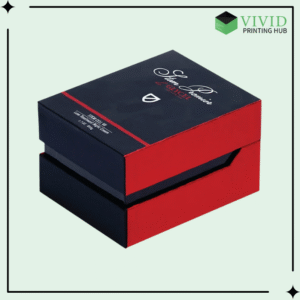
Slide rigid boxes (also called riRigid Drawer Boxesgid drawer boxes, matchbox rigid boxes, or slipcase boxes) are one of the most mechanically interesting formats in premium packaging — and one of the most technically demanding to produce correctly. The sliding mechanism must be engineered, not approximated.
At Vivid Printing Hub, we manufacture custom slide rigid boxes with 0.8–1.2mm per-side drawer clearance as standard, sleeve configuration specified for your opening experience requirements, extraction mechanism matched to your brand aesthetic, and reveal sequence designed as a deliberate brand moment.
MOQ from 100 units. Free complete design service. Free 3D proof before production. 10–12 business day turnaround. 100% satisfaction guarantee.
Request your free quote today — same-day response.
Slide rigid boxes are searched and referenced under more names than any other rigid box format. All of these terms describe the same two-component sliding format:
All refer to the same fundamental construction: a rigid outer sleeve through which a rigid inner drawer slides in one or both directions.
The most fundamental construction decision in slide rigid box specification is whether the outer sleeve is open at one end or both ends. This single decision determines the entire opening experience.
The sleeve is sealed at one end and open at one end. The drawer is inserted from the open end and slides out from the same end — there is no exit point on the sealed end.
Opening mechanics: The consumer must pull the drawer out using a ribbon, rope, or notch mechanism. The drawer slides forward from the open end as the pull is applied. The sealed end of the sleeve acts as a visual backdrop — the first thing visible as the drawer slides out is the product within.
Visual experience: The reveal is directional and theatrical — product emerges progressively from one side as the drawer slides toward the consumer.
Best for: Premium gifting, jewelry presentation, luxury cosmetics, any application where the drawer extraction creates a deliberate reveal moment from a defined direction. The ribbon or notch pull adds a tactile ritual element to the opening.
The sleeve is open at both ends. The drawer can be pushed through from one end and emerges from the other — like a matchbox (the defining consumer product in this format).
Opening mechanics: The consumer pushes on the exposed drawer end — the drawer slides through the sleeve and emerges from the opposite end. No pull mechanism required. Alternatively, a ribbon or notch can be added for a different opening feel.
Visual experience: The most interactive, most dramatically revealing opening format — the product appears to emerge from the sleeve like a stage reveal, fully visible from end-to-end as the drawer clears the sleeve.
Best for: Interactive premium gifting, subscription box hero products, limited edition and collector packaging, brands wanting the most theatrical opening experience, products where the drawer itself is a design element as much as the sleeve.
The clearance between the outer face of the inner drawer and the inner face of the outer sleeve is the single most important engineering specification in slide rigid box production. This measurement — the drawer-to-sleeve tolerance — determines whether the slide feels premium or fails.
At 0.8–1.0mm clearance per side, the drawer slides with controlled, deliberate resistance. The consumer’s pull produces a smooth, even slide — not a jerk or a bind. The drawer maintains parallel alignment within the sleeve throughout the full slide distance. This is the premium specification — it requires tight chipboard cutting tolerances, precise wrap paper application, and careful assembly.
Feel descriptor: Controlled luxury resistance — the slide takes intention and rewards with precision.
Best for: Ultra-premium applications — fine jewelry, luxury watches, premium fragrance, flagship brand packaging.
The optimal balance of slide quality and production efficiency. At 1.0–1.2mm per side, the drawer slides smoothly with slightly less resistance than the ultra-premium specification — easier to operate, still premium in feel, more forgiving of minor wrap paper thickness variations.
Feel descriptor: Smooth, confident slide — premium without excessive resistance.
Best for: Most premium consumer product applications — cosmetics, electronics accessories, corporate gifting, subscription programs.
At 1.5mm per side or greater, the drawer has perceptible lateral play within the sleeve — small side-to-side movement as it slides. At 2.0mm+, audible rattle becomes possible in retail handling. These tolerances are acceptable for short-run promotional boxes but undermine the premium premise of the rigid slide format.
We do not recommend tolerances above 1.5mm per side for any branded premium application.
Chipboard expands slightly in high-humidity environments — a box manufactured at 0.8mm tolerance in a controlled facility may bind slightly in a tropical retail environment. We specify tolerances for your distribution environment: 1.0mm tolerance for standard temperate retail; 1.2mm tolerance for high-humidity tropical markets.
The sleeve and drawer require different chipboard specifications — and the weight differential between them is an engineering choice with tactile implications.
The sleeve requires the maximum structural rigidity — its four walls must maintain dimensional stability under the sliding friction of the drawer. 2.5mm grey board provides adequate wall stiffness for most standard formats. 3.0mm grey board is recommended for large formats (sleeve width over 200mm) or applications requiring premium weight feel.
The drawer is lighter than the sleeve by design — this differential creates the correct weight dynamics for the sliding action. When the sleeve is heavier, it remains stationary in the consumer’s hand as the lighter drawer is pulled outward. When sleeve and drawer are equal weight, both tend to move together — the consumer must actively stabilize the sleeve while pulling the drawer, creating a two-handed opening awkwardness.
The 2.5mm sleeve + 2.0mm drawer differential — standard specification — produces the natural one-handed operation: hold the sleeve, pull the ribbon, the drawer slides out.
For both sleeve and drawer, white-surface chipboard (a clay-coated white surface layer over grey board) is recommended for applications requiring high-quality full-color printing directly on the chipboard — eliminating the need for a separate printed wrap paper on the interior drawer surfaces.
A satin, grosgrain, or organza ribbon bonded to the face of the inner drawer — extending beyond the open end of the sleeve when the drawer is fully inserted. The consumer grips and pulls the ribbon tab.
Width: 15–20mm standard. Narrower ribbons (10mm) for minimal aesthetics; wider ribbons (25mm) for statement gifting. Placement: Centered on the drawer face — or offset to one side for asymmetric design aesthetics. Color: Matched to the brand palette or deliberately contrasted — a white ribbon on a matte black box creates a clean, high-contrast reveal tab. Brand signal: Luxury, premium gifting, elegance. The ribbon pull is the dominant extraction mechanism for jewelry, cosmetics, and gifting applications.
A linen, jute, cotton, or leather cord bonded to the drawer face — typically looped rather than flat like a ribbon. Brand signal: Artisan, natural, tactile. Most appropriate for kraft-wrapped, botanical, and natural brand aesthetics. The natural fiber of the rope creates visual and tactile coherence with an uncoated kraft sleeve exterior.
A semicircular die-cut opening in the sleeve face wall through which the consumer inserts a finger to contact the drawer edge and push/pull directly. Position: Centered on the sleeve open-end rim — the notch height is typically 15–20mm, radius 8–12mm. Brand signal: Clean minimalism — no visible attachment element on the closed box. Preferred by brands whose aesthetic is negatively affected by a dangling ribbon or protruding rope. Apple-adjacent clean design positioning.
No extraction element required — the consumer pushes the drawer from one exposed end to emerge from the other. Brand signal: Maximum interactivity — the most dramatic reveal mechanic. For brands whose packaging is a participation experience, not just a container.
The opening experience of a slide rigid box is not a single instant — it is a sequence of 3–5 seconds that can be designed as deliberately as the exterior graphics.
The first tactile moment: the consumer grips the ribbon, rope, or notch. The quality of this grip — the ribbon width, the fabric texture, the notch radius — communicates before the drawer moves. A wide satin ribbon communicates luxury. A linen rope communicates artisan craft. A clean notch communicates modern minimalism.
As the drawer begins to emerge from the sleeve, the first interior surface becomes visible — typically the leading edge of the foam insert, the leading edge of the tissue layer, or the first edge of the product itself. This initial reveal point should be designed: a foam insert in a rich brand-matched color (deep navy foam in a black sleeve) creates an anticipatory reveal. A tissue layer in a contrasting color creates a concealment layer that delays full product visibility.
As the drawer reaches full extension, the complete interior configuration is visible. Product face-up in its cavity, centered and level — the composition that will be photographed and shared.
At full extension, the drawer sits completely outside the sleeve — the product in the drawer and the open sleeve are both visible simultaneously. For two-end-open formats, the sleeve can be removed entirely and placed beside the drawer, creating a display configuration.
The leading face of the drawer (the face visible through the sleeve end before pulling begins) is a printable surface — a brand mark, product name, or campaign message visible through the open end of the sleeve before the consumer begins to pull. This “pre-pull brand moment” is a design opportunity that zero competitors address.
Foam Insert (EVA Foam) — The standard insert for slide rigid boxes. Die-cut to product dimensions with individually contoured product cavities. Standard colours: black, white, cream, and brand-matched. The foam insert doubles as a transit protection element — product cannot shift within the drawer in any orientation. Shore hardness: 25A for jewelry, 35–40A for electronics and heavier products.
Thermoform Tray Insert — Vacuum-formed plastic tray with precision-moulded product pockets. The OEM-grade insert used for high-volume electronics and fragrance packaging. Higher tooling cost than foam; more cost-effective at 2,000+ units. Cleaner, more product-visible interior than foam.
Velvet Flocking — Applied to the drawer interior base and walls. Standard for jewelry, watch, and ultra-premium cosmetic slide boxes. Available in black, navy, ivory, sage, burgundy, and custom Pantone colors.
Satin Lining — Full fabric lining of drawer interior. Ultra-premium for wedding gifting and collector editions.
Paper Wrap Interior — Printed or plain paper wrap lining the drawer interior walls and base. Most cost-effective interior option. Can carry full-color CMYK brand printing.
Tissue Layer — Branded tissue in Pantone-matched color over the product — creates a concealment layer for the Phase 2 reveal.
Printed Drawer Exterior — The exterior of the drawer is a printable surface fully visible when the drawer is pulled out of the sleeve. Brands that design the drawer exterior as a separate brand communication surface — product information, care instructions, brand story — create a second brand moment on the full drawer extension.
The drawer’s sliding mechanism is a premium feature during use and a security risk during shipping. Four transit security solutions:
1. Friction Fit Calibration — The primary transit security mechanism. A correctly calibrated 1.0–1.2mm tolerance provides sufficient friction to prevent gravity-assisted drawer extraction when the box is oriented horizontally (the standard shipping orientation for slide boxes). Orientation sticker on outer shipper: “Store and ship horizontally” — critical instruction for all slide rigid box programs.
2. Paper Belly Band Seal — A paper band (75–100mm wide) wrapped around the full exterior of the assembled slide box and sealed with a branded sticker or wax seal. The band tears on first open — providing tamper evidence simultaneously with transit security. Most premium solution.
3. Foam Positive Pressure — The foam insert inside the drawer is dimensioned to create slight outward pressure on the sleeve inner walls when the drawer is fully inserted — supplementing drawer friction with foam expansion resistance. Adds zero visible element; provides 20–30% additional sliding resistance.
4. Corrugated Outer Shipper — The entire slide rigid box packed in a corrugated outer shipper box with foam or corrugated padding on all faces. Required for direct-to-consumer (DTC) shipping via carrier networks. We engineer both the slide rigid box and the outer shipper as a complete DTC system.
Fine Jewelry and Watches — Cigar-style format (narrow elongated) for watches, bracelet sets, and necklaces. One-end-open sleeve. Ribbon pull in brand color. Velvet flocking in drawer interior. Sleeve exterior: matte black or navy with gold foil. Drawer chipboard: 2mm. Sleeve chipboard: 2.5mm.
Luxury Cosmetics and Fragrance — Standard or elongated format. One-end-open sleeve. Wide ribbon pull. Foam cavity or satin lining in drawer. Soft-touch matte exterior with spot UV brand mark. Progressive reveal designed for social sharing.
Premium Electronics and Tech Accessories — Standard format. Two-end-open (matchbox) format popular for interactive brand experience. Foam cavity at 35–40 shore A. Matte black or white with debossed brand mark. Finger notch extraction.
Premium Spirits and Gifting — Tall narrow format for single-bottle presentation. One-end-open sleeve, rope pull (natural fiber coherence with kraft wrap). Food-safe paper insert in drawer. Gold foil on sleeve exterior.
Corporate Gifting — Standard format. Branded sleeve exterior with corporate color system, foil-embossed logo. Drawer interior with foam multi-product configuration. Ribbon pull in corporate brand color. Paper belly band seal with branded sticker for gifting presentation.
Subscription Box Programs — Two-end-open format for maximum interactive reveal. Tissue layer in drawer for concealment. Branded drawer exterior (product information visible on full extension). Corrugated outer shipper for DTC delivery.
Books and Collector Editions — Slipcase format (one-end-open, book slides out). Linen or specialty paper sleeve exterior. Finger notch or push-from-back extraction. Reinforced sleeve construction for repeated use.
Full-Color CMYK Offset — Standard for sleeve exterior and optional drawer exterior. PMS Spot Color — Brand-critical single-color specification — see Single Color Rigid Boxes section for PMS guidance. Soft-Touch Matte Lamination — Dominant luxury surface for sleeve exterior. High-Gloss UV — Vibrant, moisture-resistant surface. Tech and modern brand aesthetics. Spot UV — Selective gloss over matte base. Brand mark emphasis on sleeve top. Gold / Silver / Rose Gold Foil Stamping — Metallic brand mark on sleeve exterior. Embossing / Debossing — Dimensional brand treatment on sleeve top. Leatherette / Suede Wrap — Premium substrate exterior for sleeve — no lamination required.
FSC-Certified Chipboard — All chipboard components (sleeve + drawer) from FSC-certified sources. Recycled Content Board — Minimum 50% post-consumer recycled content chipboard. Natural Kraft Exterior Wrap — Uncoated, recyclable, biodegradable. Most appropriate for rope pull extraction — natural coherence. Paper-Based Inserts — Die-cut kraft or white cardstock inserts instead of foam — fully recyclable, compostable. Lower product protection than foam; appropriate for lighter products. Soy and Water-Based Inks — Non-toxic, biodegradable across all printing.
MOQ: 100 units. Standard Turnaround: 10–12 business days from artwork approval. Rush Production: Available for launch deadlines. Volume Tiers: 100 / 500 / 1,000 / 2,500+ units. Free US Shipping on qualifying orders. Free 3D Digital Proof — Sleeve exterior, drawer exterior, drawer interior, foam insert visualization. 100% Satisfaction Guarantee.
Slide Tolerance Engineering — We specify drawer-to-sleeve clearance based on your box dimensions, chipboard grade, and distribution market (temperate vs. humid climate) — before a single component is cut.
Sleeve Configuration Consultation — One-end-open or two-end-open: we advise on the right construction for your product type, opening experience objective, and extraction mechanism preference.
Reveal Sequence Design — We design the leading drawer face, the interior reveal layers, and the full-extension composition as deliberate brand moments — not afterthoughts.
Transit Security Engineering — Friction calibration, belly band options, foam positive pressure, outer shipper specification — complete DTC system engineering included.
Free Complete Design Service — Sleeve exterior, drawer exterior, drawer interior, foam insert — all four surfaces, zero additional cost.
Free 3D Digital Proof — Full slide sequence visualization in photorealistic 3D.
10–12 Day Standard Turnaround.
100% Satisfaction Guarantee.
What is the difference between a slide rigid box, a rigid drawer box, and a matchbox rigid box? They are all the same fundamental format: a rigid outer sleeve through which a rigid inner drawer slides. The terminology varies by emphasis and market. “Slide rigid box” and “rigid drawer box” describe the same product from different perspectives. “Matchbox rigid box” or “matchbox style” refers specifically to the two-end-open variant, where the drawer slides through the sleeve from either end — like a large matchbox. “Slipcase” typically refers to the one-end-open variant, where the sleeve is sealed at one end. All variants use the same basic two-component construction; the sleeve configuration (one-end or two-end open) is the primary structural differentiator.
What drawer-to-sleeve clearance produces the best slide feel? 0.8–1.0mm clearance per side (1.6–2.0mm total) is the ultra-premium specification — controlled resistance, deliberate slide, zero rattle. 1.0–1.2mm per side is the standard premium specification — smooth, confident slide with slightly less resistance, more forgiving of wrap paper thickness variation. We specify clearance based on your box dimensions, chipboard grade, and distribution environment — tighter tolerances for temperate climates, slightly wider for high-humidity markets. All slide boxes ship with a “store horizontally” orientation sticker to prevent gravity-assisted drawer extraction during shipping.
Should I choose a one-end or two-end open sleeve? One-end-open (slipcase format) creates a directional, theatrical reveal from a defined end — requires a ribbon, rope, or notch pull mechanism. Best for premium gifting, jewelry, and cosmetics where the extraction ritual adds value. Two-end-open (matchbox format) allows push-through from either end — no pull mechanism required. Most interactive, most dramatic reveal. Best for subscription programs, limited editions, and brands wanting maximum engagement in the opening experience. We advise on the right configuration based on your product type and brand’s desired opening experience.
What extraction mechanism is right for my brand? Ribbon pull (satin/grosgrain, 15–20mm wide): luxury gifting, jewelry, cosmetics — the classic premium gift signal. Rope pull (linen/jute/cotton): artisan, natural, botanical brand positioning — natural fiber coherence. Finger notch cut-out: clean minimalist aesthetic — no attached element, preferred by brands whose visual identity is negatively affected by a visible pull. Push-through: maximum interactivity — only available for two-end-open construction. We advise on extraction mechanism selection based on your brand aesthetic and target consumer.
How do slide rigid boxes stay closed during shipping? Three mechanisms working together: (1) correctly calibrated friction fit (1.0–1.2mm tolerance provides sufficient sliding resistance to prevent casual drawer movement in horizontal orientation); (2) optional paper belly band seal — a branded paper band wrapped around the assembled box, sealed with a sticker, tears on first open; (3) foam positive pressure from the drawer insert — the insert creates slight outward pressure on the sleeve walls, supplementing drawer friction. For DTC shipping, an outer corrugated shipper box with interior padding is required. We engineer all transit security solutions — including outer shipper specification — as part of every slide rigid box program.
Can you print on both the sleeve and the drawer exterior? Yes — and we recommend designing both surfaces deliberately. The sleeve exterior is the primary brand canvas — visible at retail display and at the moment of gifting. The drawer exterior is the secondary brand canvas — visible when the drawer is pulled out and is separate from the sleeve, and visible during the 3–5 second reveal sequence. Brands that print product information, ingredient lists, brand stories, or campaign messages on the drawer exterior create a second brand communication moment at full drawer extension. Both surfaces receive identical printing and finishing capabilities.
What is the minimum order for slide rigid boxes? Our minimum order is 100 units — appropriate for product launches, limited editions, corporate gifting programs, and brand testing. Volume pricing improves at 500, 1,000, and 2,500+ units. Thermoform tray inserts (the OEM-grade alternative to foam) are most cost-effective at 2,000+ units.
What interior finish is best for a luxury product in a slide rigid box? For jewelry, watches, and ultra-premium cosmetics: velvet flocking in the drawer interior (black, navy, ivory, or brand-matched) — the plush surface absorbs light and maximizes product visual impact. For electronics and fragrance: foam cavity insert at appropriate shore hardness — full product immobilization with contoured cavity. For gifting applications: tissue layer over a foam or paper insert — the tissue creates the Phase 2 reveal layer in the unboxing sequence. For eco-positioned brands: die-cut kraft cardstock insert — recycled, compostable, and visually coherent with a kraft sleeve exterior.
How long does production take for slide rigid boxes? Standard production is 10–12 business days from artwork approval. Rush production is available for launch deadlines and seasonal programs. For programs with both sleeve and drawer requiring full-color printing and foam cavity inserts, 12–14 business days is the conservative estimate. We maintain artwork, tolerance specifications, and insert dimensions on file for all active accounts — enabling rapid reorder turnaround.
Three seconds of controlled sliding. A drawer that moves with deliberate precision. A product revealed progressively, face-up, perfectly presented. This is not a packaging container — it is a brand performance.
At Vivid Printing Hub, we engineer every millimeter of that performance: the tolerance that determines the slide’s resistance, the sleeve configuration that determines the reveal direction, the extraction mechanism that determines the first tactile moment, and the interior sequence that determines what the consumer sees as the drawer clears the sleeve.
Call us: +1 (786) 619-8471 Email us: sales@vividprintinghub.com
Request Your Free Slide Rigid Box Quote — Same-Day Response, Tolerance Specification Included, Free 3D Slide Sequence Proof
Our MOQ varies depending on the product type and customization requirements. We can start with as few as 5 or 50 boxes and scale up to thousands, with pricing adjusting accordingly. For specific details on your product, feel free to reach out—we’re happy to assist with orders of all sizes!
Our delivery timeline ranges from 5 to 20 business days, depending on order quantity and customization requirements. We offer both standard turnaround and rush services for faster delivery. Contact us to discuss the best option for your needs!
Yes! We provide Random Sample Kits as well as Custom Physical Prototypes of your box before bulk production for approval. Depending on the order quantity, samples may be offered free of charge. You can also order a standalone prototype if needed. Contact us to learn more!
Absolutely! Our professional designers are here to help craft the perfect design for your custom packaging—free of charge. Whether you have a rough sketch, an idea, or need a complete box template, we’ll work closely with you to bring your vision to life. We also provide 3D mockups and repeated digital proofs to ensure everything aligns perfectly with your brand and product needs before production.
The ideal box size depends on your product’s dimensions, weight, and protection requirements. Simply provide the exact length, width, and height, and we’ll handle the rest! Alternatively, you can share a product link or CAD drawing for precise customization. If you’re unsure, our experts are here to help with tailored recommendations, 3D mockups, and digital proofs to ensure a perfect fit.
The cost of a custom box depends on several factors:
Color Printing: Printing 1-2 colors or full-color on the outside doesn’t impact cost significantly, but inside printing adds to the price.
Box Structure: Flat-shipped boxes are more cost-effective, while pre-assembled boxes are pricier due to volume and shipping considerations.
Customization & Materials: Specialty finishes, coatings, and high-end materials also influence pricing.
For a precise quote, feel free to reach out!
Yes! Our pricing is volume-based, meaning larger orders come with better price breaks. The more you order, the lower the cost per unit. If you’re considering a bulk purchase, reach out to our team for a customized quote!
Yes! We provide exclusive reseller pricing for businesses ordering in bulk or frequently. If you’re a reseller, distributor, or packaging supplier, contact us to discuss custom pricing, discounts, and partnership opportunities tailored to your needs.
Sam Carter
Sales Manager
Hi there! I’m looking for custom packaging boxes. Can you help me out?